
There are various number of loop designs that are best suited for specific environments and needs and at the same time complying to the IEC 60118-4 Standards, fostering inclusivity across diverse scenarios.
What is the IEC 60118-4 Standard?
This standard specifies requirements for the Field Strength (Intensity of magnetic field) of Induction Loops for hearing aids to provide adequate signal-to-noise ratio without overloading the hearing aid. Alongside Field Strength, it also specifies the minimum frequency response requirements for acceptable intelligibility.
1. Counter Loops
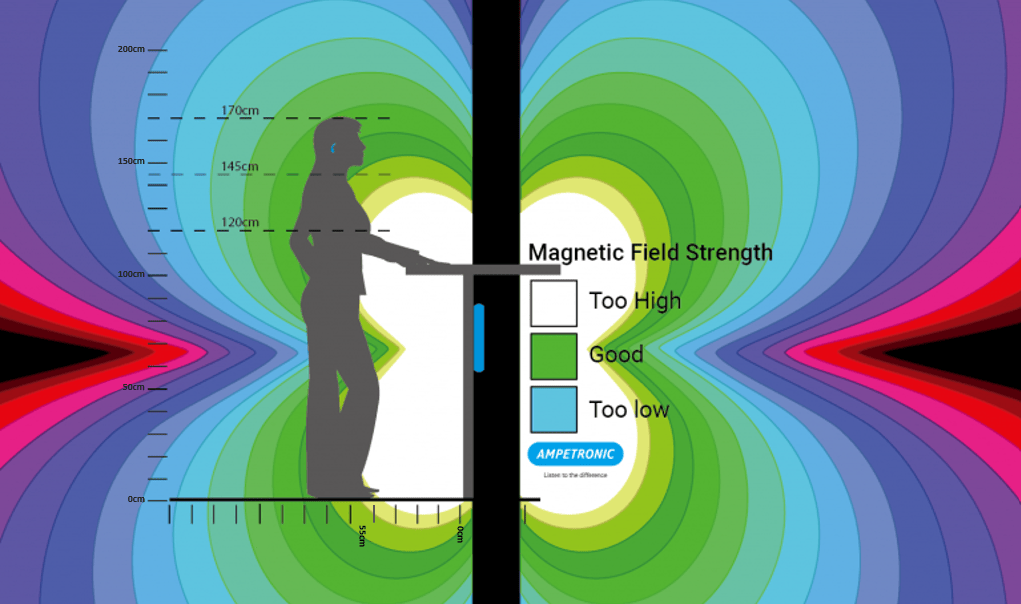
As the name suggests, counter loops are solutions that can be used for reception counters, help points and ticket counters. This type of induction loop is a small rectangular induction loop and there are a few factors that will be taken into consideration for an ideal position for maximum effectiveness;
- Counter loop should be mounted in vertical position, either on or embedded in a panel with no metal contents.
- The ideal height from the floor to the top of the loop should be at 750mm for sitting counters and 900mm for standing counters.
- The loop shall be facing in the direction of the hearing aid and cochlear implant user. This setting is most effective when the user is in a well-defined position relative to the loop.
2. Perimeter Loops
Perimeter Loops are the simplest and most basic loops that completes an induction loop system. These loops are most effective when used in a setting whereby the coverage area loop is no longer than 4 meters in width, have no requirement for privacy or concerns about signal overspill and have little to no metal in the structure of the venue.
Although Perimeter loops are the simplest and most basic of loops, it has its limitations such that the larger the size of the perimeter loop, the higher the variation over the width of the room. Larger perimeter loops will have a much lower signal strength in the middle than the areas nearer to the boundary. Where the presence of metal structures is present, metal losses will adversely reduce the field strength towards the center of the loop.
3. Cancellation Loops
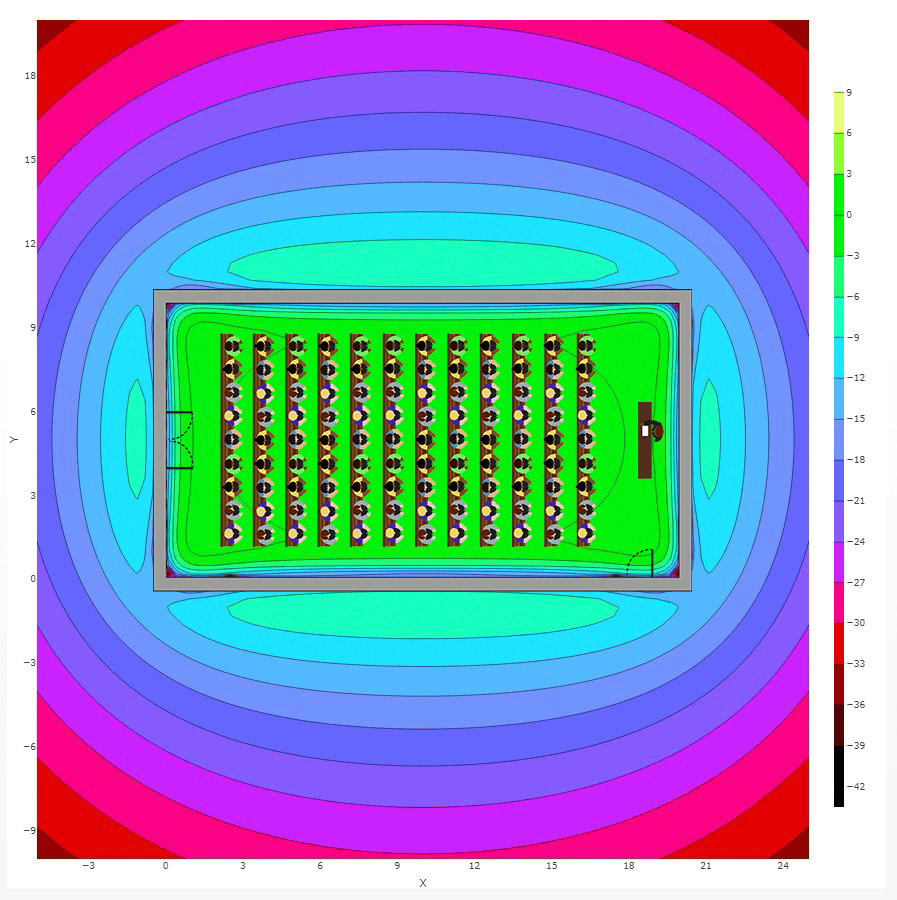
Cancellation loops are compatible with perimeter loops that has a requirement to limit overspilling in one direction. It is basically a smaller loop segment in which has been carefully designed to be of correct size and as a result, it will cancel the overspilling in one direction with the use of the same amplifier as the main loop. The same concept of a perimeter applies as previously mentioned that it is most effective when the loop is not more than 4 meters in width.
In addition, cancellation loops require higher voltage headroom as compared to a basic perimeter loop. Since there will be an area where there will be no coverage, it is important that no hearing aid and cochlear implant users are in the zero-coverage area.
4. Single Array Loops
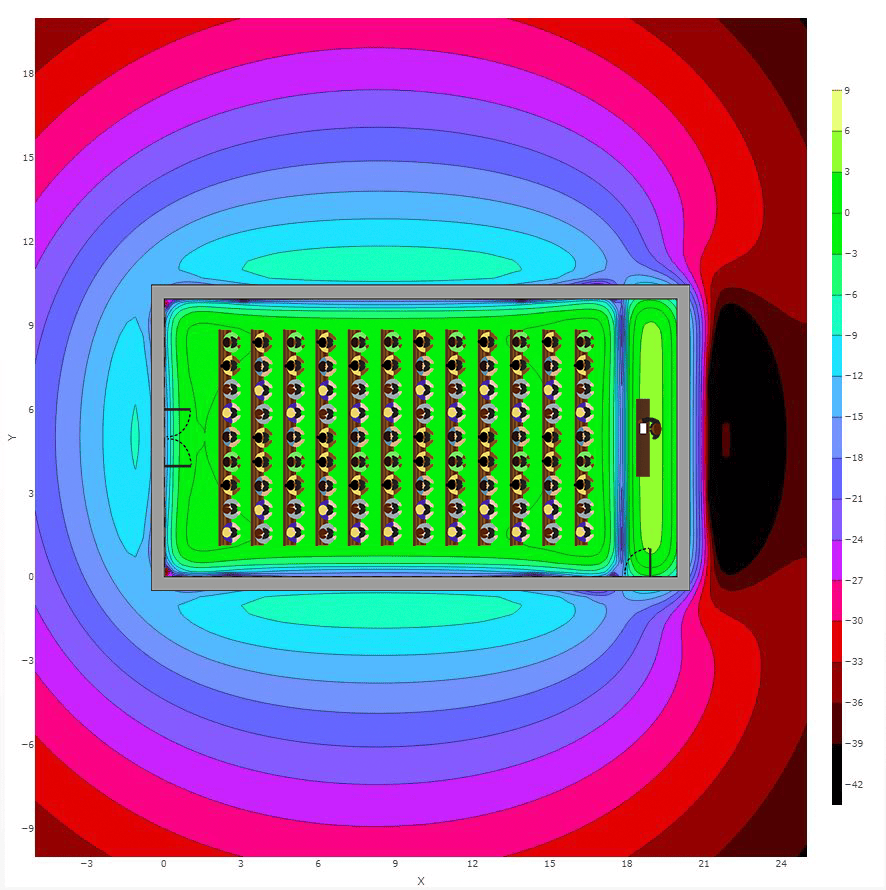
Single Array Loops in its simplest definition are multiple perimeter loops or also known as segments, formed using a single loop of cable. It is capable in providing better coverage than a single large perimeter loop since there are now more than 1 smaller sized perimeter loops that can provide more precise and quality field strengths that can be picked up by Telecoil-enabled Hearing Aid and Cochlear Implant users.
Single array loops are effective but still have areas where there are “dead” zones as there is a gap where the magnetic field coverage is absent. Hence these zones are strongly recommended for hearing aid and cochlear implant users to stay away from.
5. Multiloops
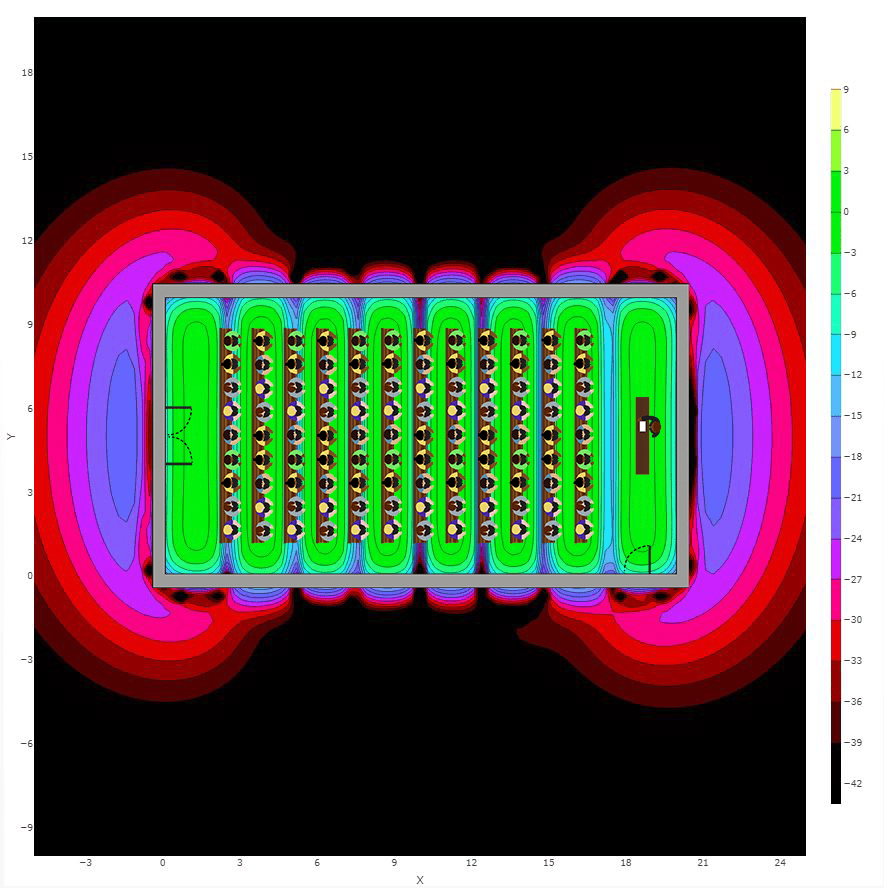
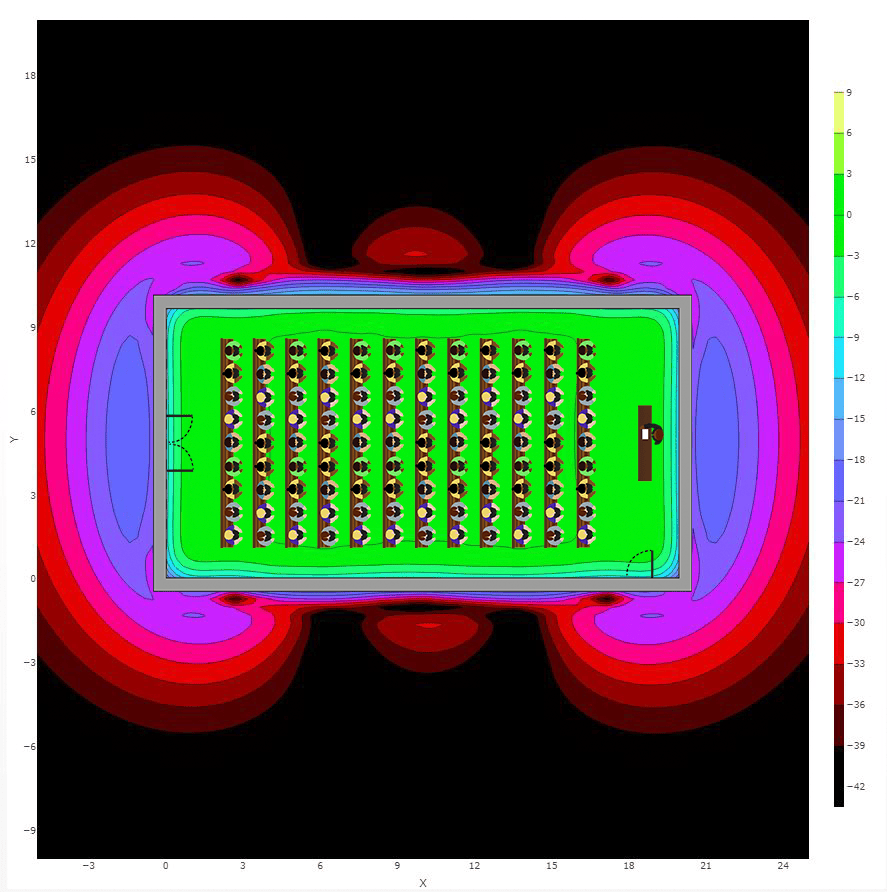
A Multiloop is a complex loop design that comprises of 2 arrays with multiple segments that complement each other to provide even coverage for large areas like Multi-Purpose Halls, Prayer Halls and Classrooms, just to name a few. Multiloops can be further categorized into Low Loss and Low Spill multiloops. A simplified breakdown of these types of multiloops are as follows;
- Low Loss Multiloops
As the name suggests, the purpose of this multiloop design is to ensure that the multiloop is able to provide as much effective coverage as possible by compensating for high metal loss in the venue. When a venue has relatively high metal content, the signal gets bounced back, cancelling the loop signal to a certain degree, affecting the audio that hearing aid and cochlear implant users hear. This results in the audio being muffled and not natural sounding.
With proper designs and laying of Low Loss multiloops, the results will reflect an even field coverage over any room size, be it in the presence of metal or not. Although the overspilling effect is substantially reduced, it is a much better solution compared to a perimeter loop.
- Low Spill Multiloops
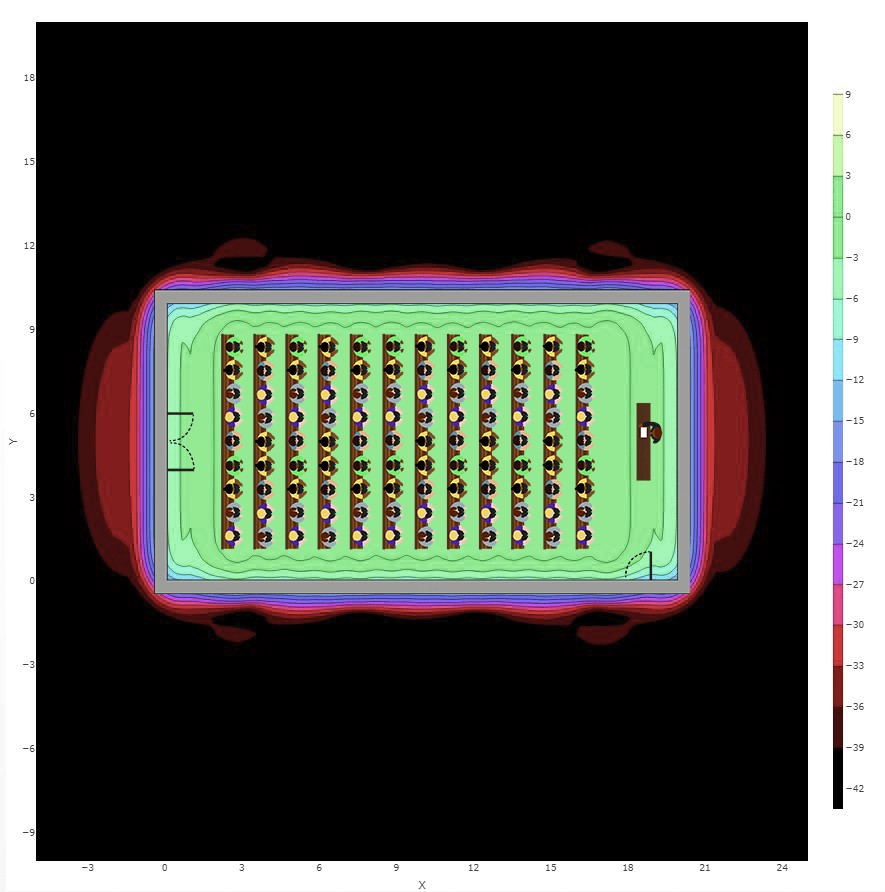
Low Spill multiloops are similar to Low Loss multiloops, able to provide an even field coverage but only with more control of the overspilling effect. This loop design is most effective when there is a stage where electrical instruments like an electric guitar or even a dynamic microphone is present as it might induce interference. That is where careful and good loop designing with the help of simulation tools is crucial to keep the overspilling effect to the bare minimum.
Conclusion
To summarise, there is no one-size-fits-all loop design that can be used for any venue. There are multiple factors to the purpose of installing an induction loop such as privacy, overspilling, size of coverage area. Designing and installing an induction loop to fit the needs of the venue is bespoke and requires careful considerations without having to overspend on unnecessary systems and add-ons.
Featured Projects

Movie event at Shaw Theatres Balestier organised by The Listening Lab and in collaboration with Advanced Bionics
Movie event at Shaw Theatres Balestier organised by The Listening Lab and in collaboration with Advanced Bionics Posted in FAQ…

Vertical and Adjacent Crosstalk of Induction Loop Systems in NUS COM4
Vertical and Adjacent Crosstalk of Induction Loop Systems in NUS COM4 Posted in FAQ | Updated on March 7, 2024…
Looking for Government Aid for Accessibility?
Looking for Government Aid for Accessibility? Posted in FAQ | Updated on March 6, 2024 The Building and Construction Authority…

Tampines North Polyclinic
Tampines North Polyclinic Featured Project Tampines North Polyclinic serves as an easily accessible healthcare in the Tampines North Estate. Serving…

Sri Lankaramaya Temple
Sri Lankaramaya Temple Featured Project Photo credit: allabout.city Nestled amidst the bustling streets of Singapore lies a serene oasis…

Monfort Chapel at Montfort Secondary School
Monfort Chapel at Montfort Secondary School Featured Project Tucked away amidst the bustling corridors and vibrant classrooms of Montfort Secondary…
Canadian International School (Lakeside Campus)
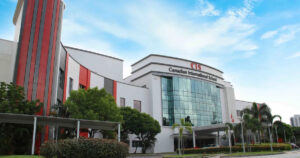
Canadian International School (Lakeside Campus) Featured Project Photo credit: Canadian International School The Canadian International School (CIS) in Singapore…

National Skin Centre
National Skin Centre Featured Project The Singapore National Skin Centre (NSC) stands as a beacon of dermatological excellence in the…
Meningkatkan Manfaat bagi Siswa Anda dengan Alat Bantu Dengar dan Implan Koklea: Ini Caranya!
Meningkatkan Manfaat bagi Siswa Anda dengan Alat Bantu Dengar dan Implan Koklea: Ini Caranya! Posted in FAQ | Updated on…
Heightening the benefits for your students with Hearing Aids and Cochlear Implants is possible. Here’s how!
Heightening the benefits for your students with Hearing Aids and Cochlear Implants is possible. Here’s how! Posted in FAQ |…